
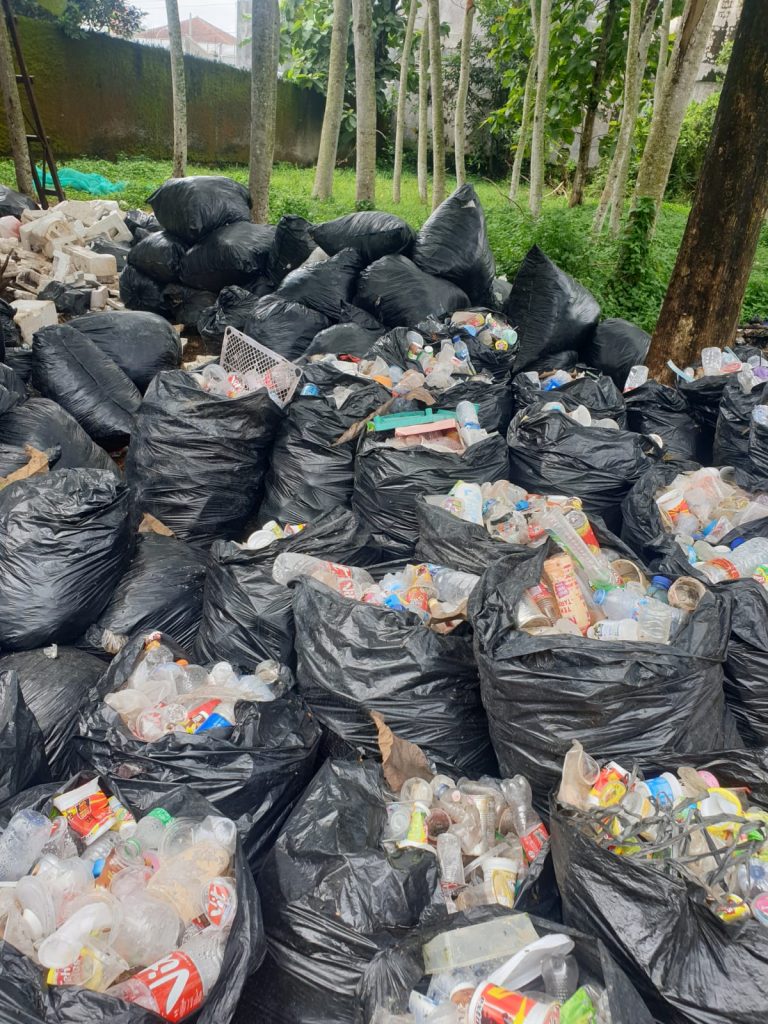
Indonesia has been living through a waste emergency for a long time. For plastic waste alone, 2021 data from Indonesia's Central Statistics Agency (BPS) put the country's plastic waste at 66 million tons per year. Three years earlier, a study by the Indonesian Institute of Sciences (LIPI) estimated that somewhere between 260,000 and 590,000 tons of that plastic ends up flowing into the ocean.
This is not a situation we can afford to keep ignoring — and it's not one government effort alone can solve.
Wanting to be part of the response to this waste emergency, Arky Gilang Wahab — a Geodetic Engineering graduate from ITB (Bandung Institute of Technology) — threw himself into waste management work in Banyumas back in 2018.
"There was a pretty serious problem — Banyumas was in a waste emergency, the landfill had collapsed and residents were protesting. The city stopped collecting trash, so it just piled up — in the town square, at the sports complex, everywhere," Arky recalled, describing what first pushed his organization, Green Prosa, to get involved in solving Banyumas's waste crisis.
Banyumas Regency did indeed face a waste emergency in 2018, when the landfill (TPA) in Kaliori Village, Kalibagor District, was shut down after local residents protested and blocked it. An emergency meeting convened by the Banyumas district government reached a deadlock with no solution in sight. Eventually, the district government resorted to sending a chain message over WhatsApp to every neighborhood and community unit head across the urban area, warning them about the waste emergency triggered by the Kaliori landfill closure.
Arky felt the situation couldn't be allowed to continue. That same year, he and his colleagues at Green Prosa — an environmental conservation startup — began researching waste management approaches.
"Bit by bit, we started out managing both organic and inorganic waste, but by 2019 we decided to focus only on organic waste, since it made up the larger share — around 50 to 60 percent of total waste," explained the bespectacled entrepreneur.
Beyond its sheer volume, Arky also noticed that organic waste was something few people paid much attention to. "We figured that if we focused on collecting inorganic waste, we'd be cutting into the livelihood of the waste pickers," he said, recalling how his organization first began hauling organic waste to support the Banyumas district government.
Working alongside four Community Self-Help Groups (Kelompok Swadaya Masyarakat, or KSM), Green Prosa began processing organic waste into compost fertilizer. "But that required a lot of land and a lot of time, which ended up making it pretty inefficient," he admitted. To solve this, he and his team eventually decided to speed up organic waste decomposition using black soldier flies.
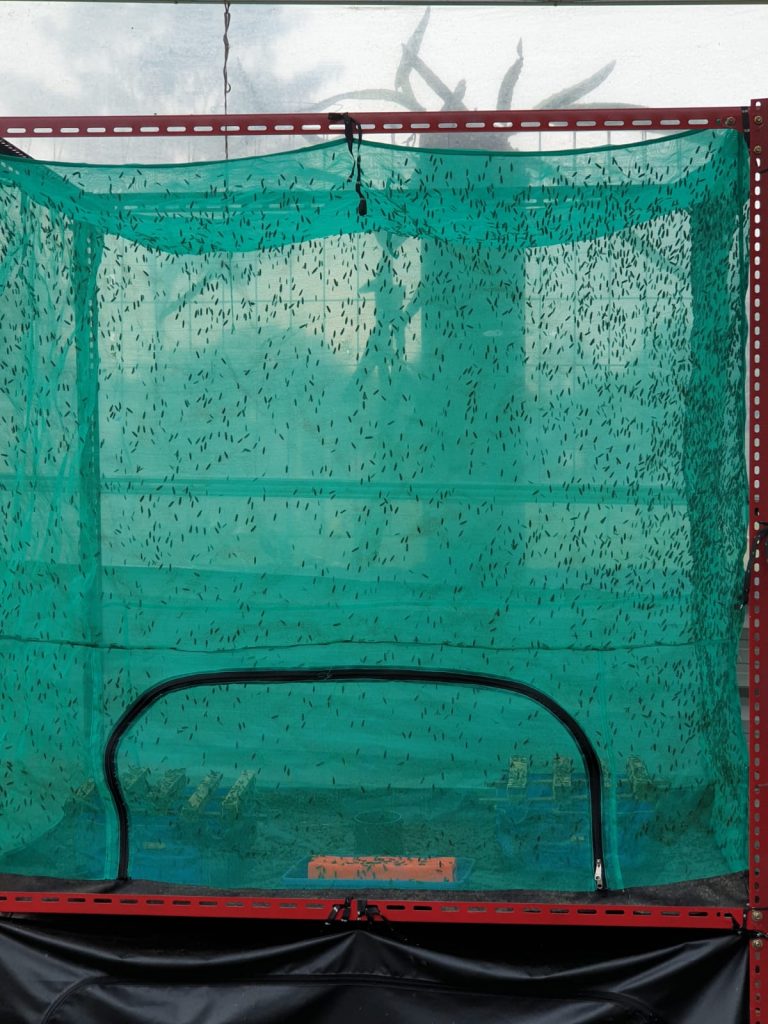
"We decided to use maggots — the larvae of the black soldier fly — which can break down waste equal to four or five times their own body weight in just a single day," he explained.
Turning Waste Pickers Into Heroes in the Fight Against Waste
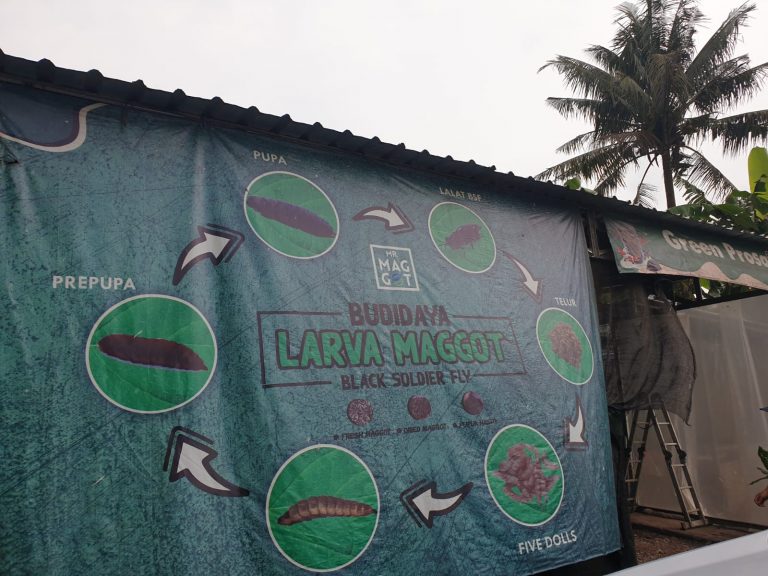
Recognizing the crucial role waste pickers play, Arky and his colleagues developed a business model for waste processing built around partnerships with their KSM allies. Waste collected from customers is brought to a sorting site, where the organic portion is separated out and processed into organic fertilizer and maggots used for livestock feed. There are three sorting sites in operation: in Karangcegak Village (Sumbang District), Sokaraja Kulon Village (Sokaraja District), and Teluk Sub-district in South Purwokerto.
"We then partnered with farming groups, because non-subsidized organic fertilizer currently costs 3,000 to 4,000 rupiah, while chemical fertilizer runs 14,000 to 15,000 rupiah. We sell our organic fertilizer for a maximum of 1,000 rupiah, but through a reseller model — farming groups buy from us and resell it at 1,500 rupiah per kilogram," Arky explained.
As a result, he said, a kind of circular economy has emerged: vegetable farmers can lower their production costs by using cheaper organic fertilizer, which in turn allows vegetable prices to come down as well. Through this business model, Arky estimates more than 250 people benefit directly, with an additional 30,000 or so benefiting indirectly.
"Within the KSM structure, 115 people are involved in collecting and sorting organic waste," Arky said. Despite the significant role they play, he noted that the waste collectors and sorters typically earn a base income below the regional minimum wage (UMR).
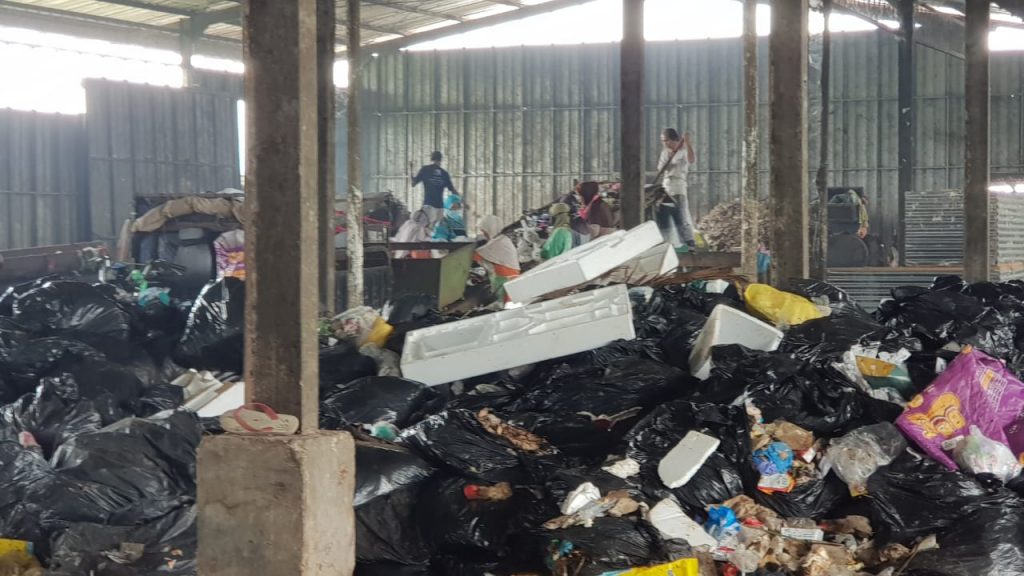
According to Arky, the number of workers involved in waste collection and sorting actually grew during the COVID-19 pandemic. "The number of KSMs grew during the pandemic — before that, we struggled to find workers. Recently, we posted job openings offering 800,000 to 1 million rupiah in salary, and 700 people applied," he said.
Aware of both the urgency of waste management in the region and its potential to create new jobs, Arky and his team have set out to shift the mindset of both waste pickers and their customers. "We've brought them — the waste pickers — in as KSM members, who also receive training and support from the relevant government agencies," said Arky.
To date, Arky estimates his organization has successfully managed 10 to 12 tons of organic waste per day across Purwokerto and its surrounding areas, serving nearly 6,000 households.
Even as the customer base keeps growing, Arky doesn't shy away from acknowledging that many people still look down on the profession of waste picking. "What's hard is that so many people still belittle them — that's why we call them waste managers, not waste pickers," he said.
Partnering With Gerakan PASTI to Shift the Mindset
Efforts to tackle waste rarely succeed without collaboration across multiple parties. At the end of 2021, Arky accepted an invitation from Naning Adiwoso, Chairwoman of Gerakan PASTI, and Variati Johan, the organization's Secretary-General, to partner on education initiatives aimed at shifting public attitudes toward the vital role played by waste collectors and sorters.
"Alhamdulillah, working together with Gerakan PASTI, we want people to see us as waste managers — not as waste ourselves. It starts with something simple: giving our workers uniforms to improve their safety, followed by proper shoes and helmets," Arky explained.
Arky also noted that Gerakan PASTI plans to help raise funds for building a warehouse, which will be used as a dedicated waste-sorting facility.
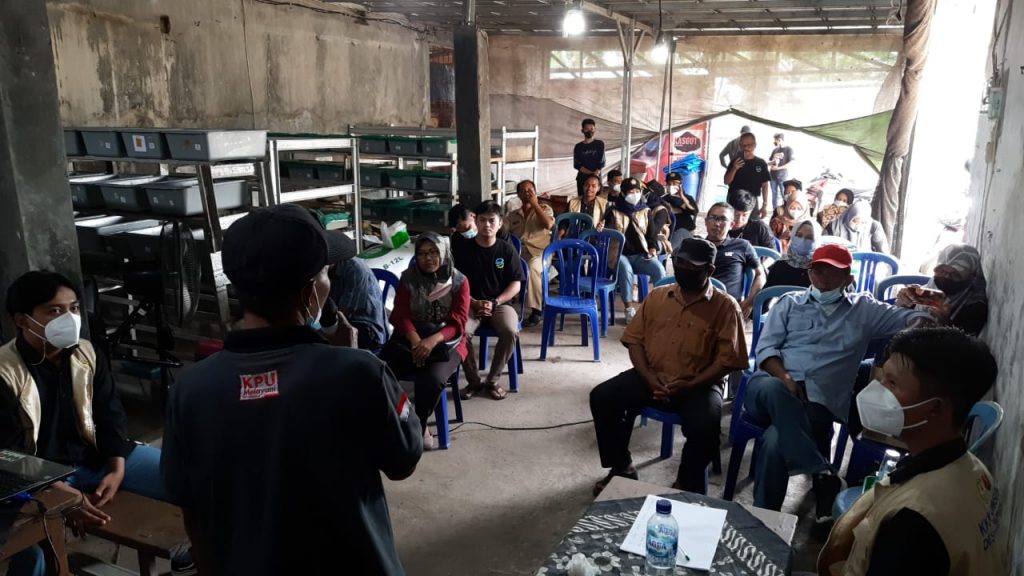
Finally, Gerakan PASTI's Secretary-General, Variati Johan, called on the wider public to get involved in tackling waste and to support Green Prosa's efforts in Banyumas. "This matters, because whether we realize it or not, all of us contribute to waste — but none of us can manage it entirely on our own," she said.
This call to action isn't made without reason — waste is not a problem that belongs to the people of Banyumas Regency alone. (**)