Can we really say "Say No to Plastic"? In reality, no. Plastic is a remarkable material — lightweight, strong, and durable for hundreds of years. But have you ever stopped to think about where all that plastic actually ends up? The answer depends heavily on each country's circumstances. Here's how that plays out for Indonesia, across four dimensions:
Geo-Environmental
In Indonesia, waste ends up in landfills. That means everything we produce needs to be capable of breaking down. Our country is humid, sits on the equator as a tropical nation, receives sunlight year-round, and spans a vast and widely scattered archipelago.
Geo-Social
Average incomes in Indonesia remain lower than in Europe, the United States, Japan, Korea, and other developed nations. Nearly half — or more — of our population sits at the bottom of the economic pyramid, with only elementary or middle school education, leaving many without a clear understanding of plastic types and their environmental consequences. From a social standpoint, whatever solution we offer the broader public needs to match what people can actually afford and are willing to adopt.
Geo-Economic
Right now, the most accessible and affordable solution available to the general public is OXO plastic. Looking 10 to 20 years ahead, as public understanding and awareness improve, the market may well shift toward other plastic technologies. Industry players and researchers certainly won't stop innovating — environmental considerations will keep driving that evolution forward.
Geo-Political
Politically, Indonesia's circumstances differ from those of developed nations, and any solution needs to be built around what our society can realistically manage — not around standards set by wealthier countries. Indonesia shouldn't become a political battleground for foreign businesses pushing regulations shaped by economies far more advanced than our own.
The Solution
We need to educate and inform the public about the different types of plastic available, so consumers can make choices that fit their means. Plastic shopping bags are actually used far less than plastic packaging for products like instant noodles, shampoo, and coffee. This is the real issue — and it's just the tip of the iceberg.
The solution lies in public education aimed at reducing plastic waste, ideally shifting everything toward biodegradable options that also remain economically accessible. This needs to reach everywhere: from villages to cities, from coastlines to mountains, from farms to fisheries.
On the ground, OXO plastic remains one of the most realistic solutions for where we stand today. Without education and real behavioral transformation, innovation alone accomplishes little. The problem persists indefinitely. We can't afford to stand still — a choice has to be made.
Today's market offers several different plastic technologies, each with its own tradeoffs: Ecoplastic — sustainable, but the production process is costly and the resulting price is high; readily biodegradable. Enviplast — dissolves easily but remains expensive, and contains PVA. OXO — not fully sustainable, but easy to produce, biodegrades within 18–25 months, and remains affordable.
About the Program
With this in mind, Gerakan PASTI launched the Green Initiative Award 2020, an outreach and education initiative aimed at industry and the public, encouraging greater waste awareness and more responsible plastic use.
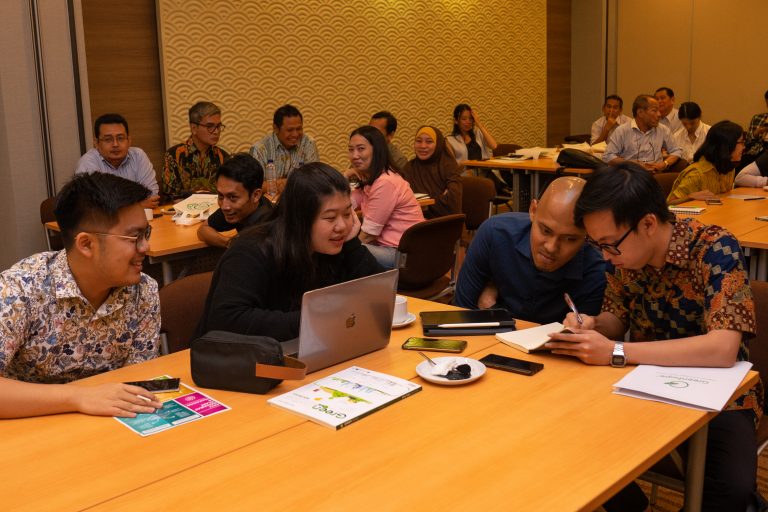
The program's kickoff event was held on January 16, 2020, bringing together representatives from the F&B industry, hospitals, shopping centers, transportation companies, and everyday consumers.
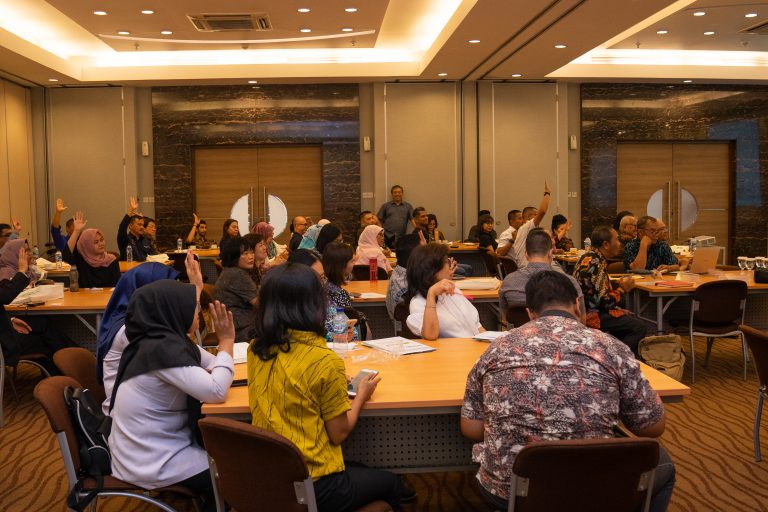
At the event, we launched the Green Initiative Award 2020 competition, open to four industry categories: Hotels, Hospitals, Offices, and Retail. The competition evaluates how "green" a facility truly is, based on criteria such as:
- Use of everyday amenities
- Waste disposal and management practices
- Green procurement
- And other related factors
Participating organizations had one month to complete and submit the competition form for judging. The Green Initiative Award ceremony took place on February 19, 2020, at the Jakarta Design Center.